
Ragas Explained: Metrics, Setup, and When to Use It
Ragas is an open-source library for evaluating LLM applications, especially RAG pipelines and agents. This guide explains what Ragas measures, shows a minimal evaluation you can run, and states clearly where human review is still needed.
View 7 referencesAllow the functional cookie to save your likes. Privacy details
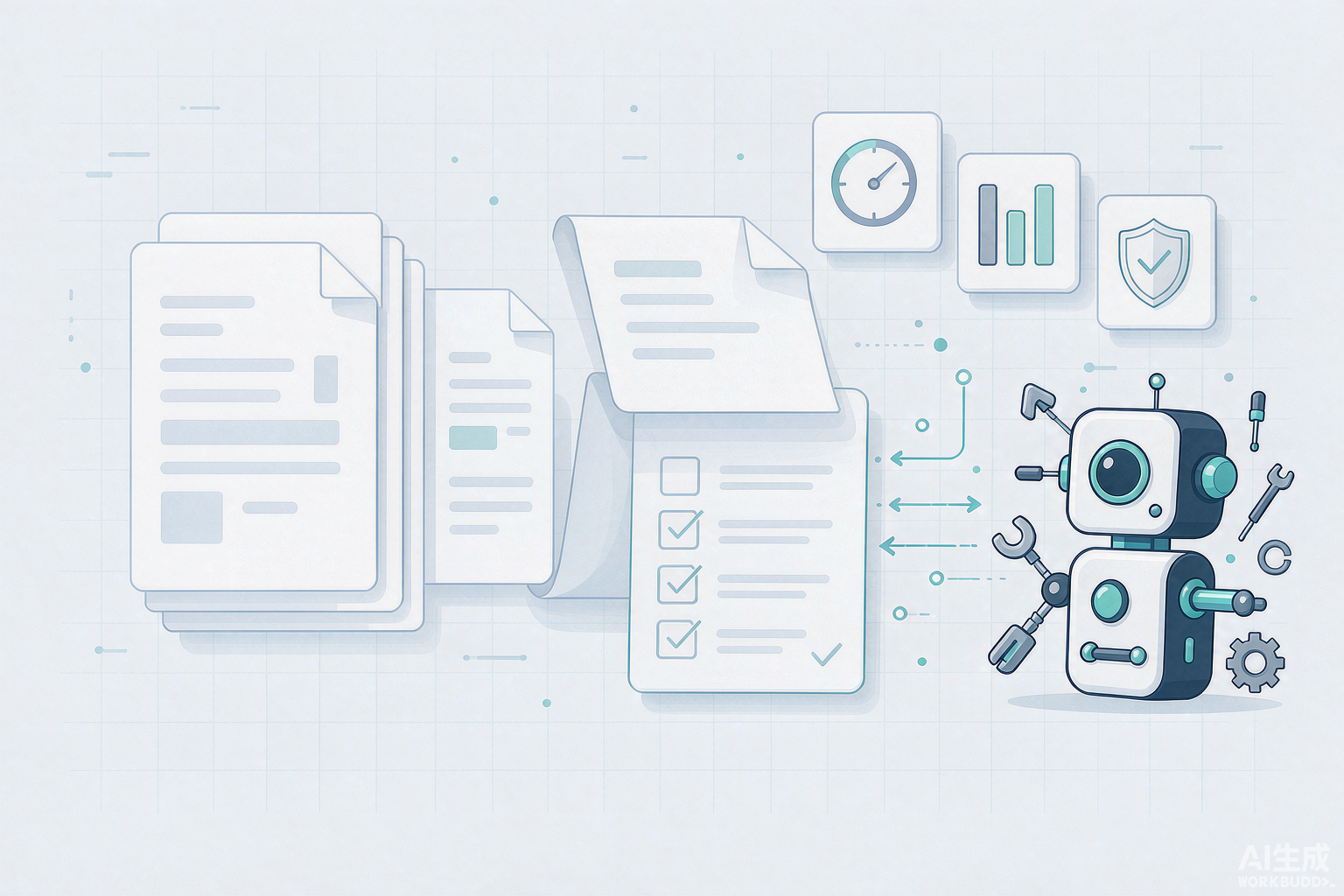
Ragas has become a common name in LLM evaluation because it turns subjective review into repeatable scores. This guide explains what it measures, shows a minimal evaluation you can run, and states where human review is still needed. Every factual claim below is checked against the project's own documentation, its original paper, and Microsoft's MLflow integration notes.
What is Ragas and what problem does it solve?
Ragas is an open-source library for systematic evaluation of large language model applications. The project describes its goal as moving from "vibe checks" to systematic evaluation loops. The library matters because retrieval, prompting, tool calls, and generation can each fail independently, so one plausible-looking answer rarely tells you which part of the pipeline broke.
The original paper introduced Ragas as a reference-free framework for retrieval augmented generation. Reference-free here means the framework was designed to work without human-written gold answers for every query, although many current metrics can also use references when they are available. The docs now describe a broader toolkit covering experiments, custom metrics, and dataset management.
Which Ragas metrics answer which RAG question?
For retrieval augmented generation, Ragas separates retrieval quality from answer quality. Context Precision asks whether useful passages were ranked highly, Context Recall whether the context covered the needed facts, and Faithfulness whether the answer stayed inside that context. Response Relevancy checks whether the answer addresses the question. Official metric list
| Question you are asking | Ragas metric | Reference needed? |
|---|---|---|
| Did retrieval rank useful passages first? | Context Precision | Depends on metric variant |
| Did retrieval find all necessary facts? | Context Recall | Usually yes for the reference variant |
| Is the answer grounded in retrieved context? | Faithfulness | No |
| Does the answer address the user's question? | Response Relevancy | No |
| Is the answer factually correct? | Factual Correctness | Often compared with a reference |
That split is the practical reason to adopt this framework instead of a single pass/fail check. If Faithfulness is high but Context Recall is low, the model is behaving itself but the retriever is missing source material. If retrieval looks good and Faithfulness drops, investigate prompting or the model before rewriting the index.
Which Ragas metrics cover agents and tool use?
The library also lists four agent-oriented metrics: Tool Call Accuracy, Tool Call F1, Agent Goal Accuracy, and Topic Adherence. They check whether the right tools were called with suitable parameters, whether the agent reached its goal, and whether it stayed on topic. Microsoft's MLflow docs expose the same families as scorers, so Ragas metrics can fit an existing experiment workflow.
For an agent that books meetings, for example, Tool Call Accuracy checks the call itself while Agent Goal Accuracy checks the outcome. Running both through Ragas prevents a false pass where the agent called a calendar tool correctly but booked the wrong slot.
How do you run a first Ragas evaluation?
The current Ragas quickstart recommends uvx ragas quickstart rag_eval or pip install ragas followed by the same scaffold command. The RAG guide builds a dataset with user_input, retrieved_contexts, response, and optional reference fields, loads it into EvaluationDataset, and passes metrics plus an evaluator LLM to evaluate(). Budget for that judge model's API calls.
The shape of a minimal evaluation looks like this, based on the official RAG guide:
from ragas import EvaluationDataset, evaluate
from ragas.llms import LangchainLLMWrapper
from ragas.metrics import LLMContextRecall, Faithfulness, FactualCorrectness

evaluation_dataset = EvaluationDataset.from_list(dataset)
evaluator_llm = LangchainLLMWrapper(llm)

result = evaluate(
    dataset=evaluation_dataset,
    metrics=[LLMContextRecall(), Faithfulness(), FactualCorrectness()],
    llm=evaluator_llm,
)
print(result)
Each row in dataset needs the question, the retrieved passages, the generated answer, and a reference when your chosen metric requires one. Start with a small set of real user questions rather than synthetic happy paths; Ragas can only measure what the dataset represents.
How should you read a Ragas score?
Treat a Ragas score as a directional signal, not an absolute truth. Many metrics use an LLM as judge, which introduces cost and variance, and the docs explicitly support custom metrics when built-in ones do not match your criteria. A drop after a prompt change is useful even when the absolute number is not comparable across different judge models.
Calibrate with a human sample. Read a dozen scored cases, compare them with what your team would have judged, and only then use score thresholds in CI. Keep the judge model and metric versions fixed when comparing runs; otherwise a score change may reflect a different evaluator rather than a different application.
How does Ragas compare with other evaluation tools?
Ragas is strongest when the question is about retrieval quality or agent behavior and you want a library you can embed in notebooks and CI. DeepEval and promptfoo are alternative open-source frameworks; LangSmith and Langfuse add tracing and observability around evaluation. The right choice depends on whether you need a metric library, a test runner, or a full tracing platform.
| Tool | Main strength | Where Ragas differs |
|---|---|---|
| DeepEval | Pytest-style assertions | The library is organized around experiments and metric families |
| promptfoo | CLI testing and red teaming | It focuses more on RAG and agent metrics |
| LangSmith | Tracing plus online and offline eval | Ragas can be used as a metric layer inside other stacks |
| Langfuse | Open-source tracing and prompt management | Ragas supplies the scoring logic that tracing tools can consume |
These are different layers, not mutually exclusive products. A team can trace requests in one platform and still use those metrics to score the resulting traces.
What did the original Ragas paper actually claim?
The 2023 paper "Ragas: Automated Evaluation of Retrieval Augmented Generation" was written by Shahul Es, Jithin James, Luis Espinosa-Anke, and Steven Schockaert. Its abstract proposes metrics for retrieval focus, faithful use of context, and generation quality without relying on ground-truth human annotations. It also reports integrations with LlamaIndex and LangChain.
That scope matters when reading modern descriptions of the project. The paper established the research foundation for reference-free RAG evaluation; the current library has since added agent metrics, experiments, and custom-metric support. Citing the paper is appropriate for the original idea, while implementation details should come from the current docs.
Where does Ragas fall short?
Ragas does not replace production monitoring. Latency, cost, prompt injection, data leakage, and user feedback need separate instrumentation, and LLM-judged scores can disagree with careful human review. Good test data is also a hard requirement: if the dataset does not resemble real traffic, Ragas will reliably measure the wrong thing.
Another limitation is scope. Ragas is a library, so dashboards, alerting, and experiment history generally come from elsewhere, such as MLflow or an observability platform. Plan that boundary before promising a complete quality system built on metric scores alone.
FAQ: practical questions about Ragas
Questions about Ragas in practice cluster around licensing, agent support, reference answers, and CI. The short answers are that the library is Apache-2.0, agent metrics exist when you have tool traces, not every metric needs a gold answer, and CI use works best with a small stable set of metrics. The subsections below explain each point with a source.
Is Ragas free to use?
The project repository is public and the install command is pip install ragas; its LICENSE file is Apache-2.0, so the library itself can be used under an open-source license. The LLM calls made by judge metrics are billed by your model provider, and hosted products around evaluation may have their own pricing. Budget for evaluator calls as you would for any other model usage.
Can Ragas evaluate agents, not just RAG?
Yes. The official metric list includes Tool Call Accuracy, Tool Call F1, Agent Goal Accuracy, and Topic Adherence under agents and tool use. Use these metrics when you have traces or structured records of tool calls; if you only store final chat text, you may need to add instrumentation before agent metrics become meaningful.
Does Ragas need human-written reference answers?
Some metrics do and some do not. Faithfulness and Response Relevancy can work from the question, context, and answer, while Context Recall and Factual Correctness commonly use a reference for comparison. The original research emphasized reference-free evaluation, but current practice mixes both types, so check the page for each Ragas metric before building a dataset.
Can Ragas run in a CI pipeline?
Yes. The docs describe an experiments-first approach and the library can be run from Python, which makes it suitable for CI. Choose a stable evaluator model, store per-run scores, and fail the build only on changes you have calibrated. Running every metric on every commit can be expensive; start with the two or three metrics that match the change being reviewed.
Bottom line: when to adopt Ragas
Adopt Ragas when you need to know whether a retrieval or agent change actually improved quality, and when you are willing to maintain a representative dataset. It is a good fit for teams that can run an evaluator LLM and interpret metric families rather than chase one number.
Skip Ragas when the core problem is missing observability, unclear product requirements, or a dataset that does not reflect users. In those cases, fix instrumentation and data collection first; Ragas will be more useful once there is something trustworthy to score.
References
- Ragas - official documentation introductiondocs.ragas.io
- List of available metrics - Ragas documentationdocs.ragas.io
- Evaluate a simple RAG system - Ragas documentationdocs.ragas.io
- Ragas: Automated Evaluation of Retrieval Augmented Generation - arXivarxiv.org
- RAGAS scorers - Microsoft Learnlearn.microsoft.com
- vibrantlabsai/ragas GitHub repositorygithub.com
- Apache-2.0 LICENSE in vibrantlabsai/ragasraw.githubusercontent.com